INTERCOM-Related Publications
International Perspectives on Museum Management

Authors: Darko Babic (ed.) (ICOM publication)
Published: 2025
This open-access collection provides a global overview of museum management practices across diverse institutional and cultural contexts. It emphasizes how strategic vision and leadership enable museums to fulfill their missions while adapting to local challenges. The book explores governance models, workforce management, and stakeholder engagement, highlighting differences between regions. It also examines how museums balance social responsibilities with operational constraints. The comparative perspective makes it particularly useful for understanding how management practices evolve internationally.
The Manual of Museum Management: For Museums in Dynamic Change

Author: Gail Dexter Lord
Published: 2024
A widely used practical guide covering all aspects of museum operations, including governance, strategic planning, collections management, and finance. It provides tools for decision-making and emphasizes professional standards. The book bridges theory and practice, making it essential for both students and practitioners navigating institutional complexity.
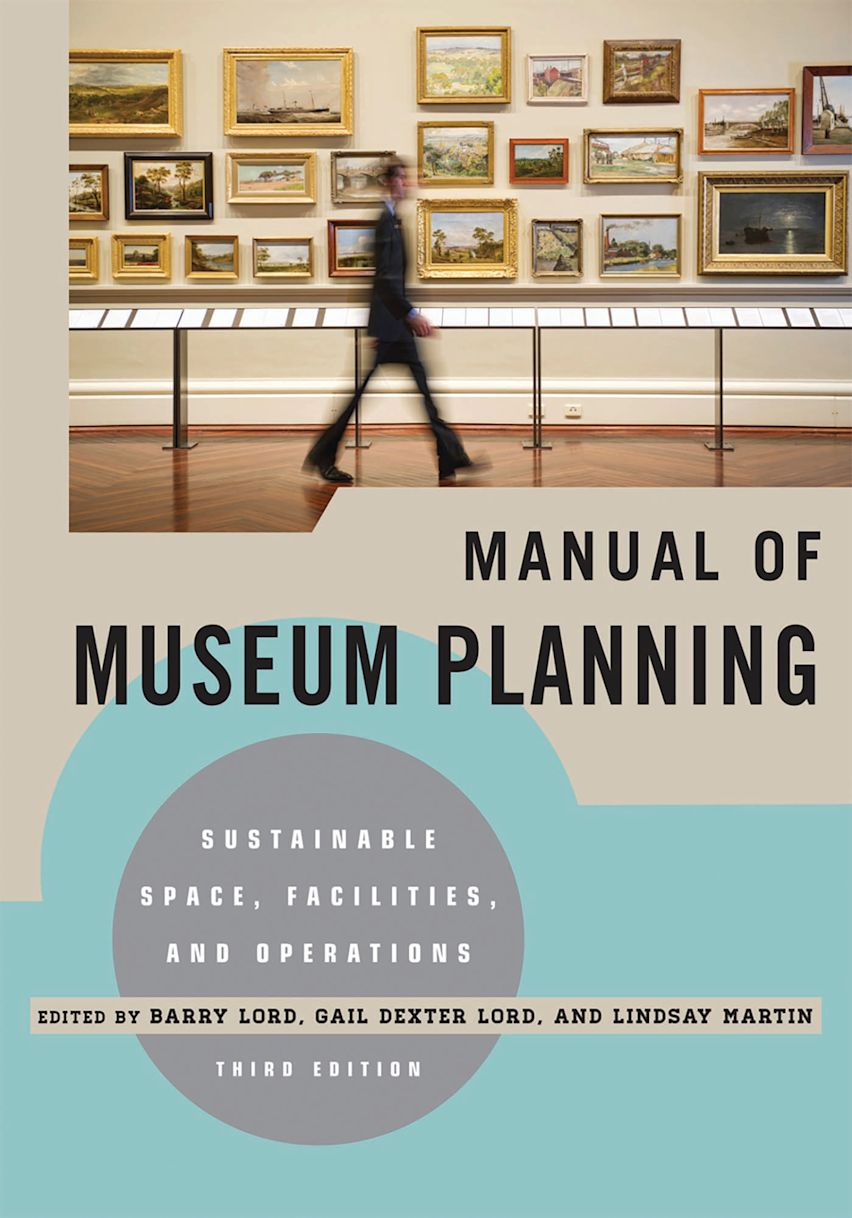 Authors: Barry Lord (Anthology Editor) , Gail Dexter Lord (Anthology Editor) , Lindsay Martin (Anthology Editor)
Published: 2012
Manual of Museum Planning is a comprehensive guide to the planning and development of museums, focusing on the integration of mission, audience, and operational strategy. The book outlines a structured planning process that begins with defining institutional purpose and extends through feasibility studies, concept development, and implementation. It emphasizes the importance of aligning collections, exhibitions, and public programming with strategic goals and community needs. The authors introduce practical tools for master planning, including stakeholder analysis, space programming, and financial forecasting. Special attention is given to interdisciplinary collaboration among architects, curators, and managers. Widely used by museum professionals, the manual bridges conceptual planning and practical execution, helping institutions create sustainable, visitor-centered environments while maintaining institutional integrity and long-term viability.
Manual of Digital Museum Planning
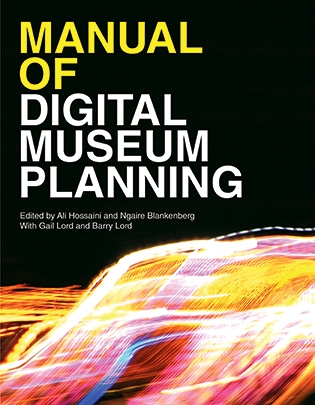 Editors: Ali Hossaini & Ngaire Blankenberg (with Gail Dexter Lord & Barry Lord)
Published: 2017
Manual of Digital Museum Planning is a comprehensive guide to integrating digital technologies into all aspects of museum strategy, operations, and audience engagement. Structured as a step-by-step manual, it examines how digital transformation reshapes the museum’s value proposition, moving toward user-centered, omnichannel experiences. The book provides practical frameworks for incorporating digital tools into workflows, including data analytics, user experience design, and project management. It also addresses organizational implications such as new business models, infrastructure requirements, and emerging professional competencies. Drawing on contributions from leading institutions like the British Museum and the Metropolitan Museum of Art, the volume combines theory with applied case studies. It is particularly valuable for planning new museums, expansions, or digital initiatives, offering actionable guidance for building sustainable, digitally integrated cultural organizations in the contemporary landscape.
Manual of Museum Exhibitions (3rd Edition)
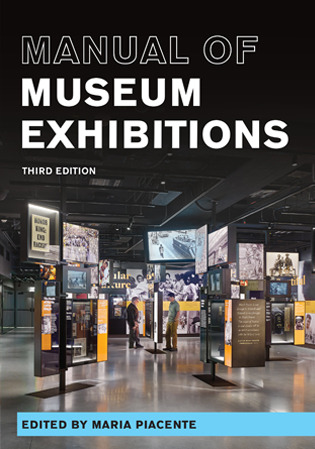 Author: Maria Piacente (ed.)
Published: 2022
Manual of Museum Exhibitions (3rd Edition) is a comprehensive and practical guide to the full exhibition development process, from concept and interpretive planning to design, production, and evaluation. The book positions exhibitions as the central public interface of museums, driving both audience engagement and institutional revenue. It reflects a shift toward visitor-centered, participatory, and storytelling-driven experiences, requiring increasingly complex and interdisciplinary approaches. The manual provides adaptable methodologies for institutions of all sizes and includes expanded content on digital and virtual exhibitions, multimedia integration, traveling exhibitions, and DEAI (diversity, equity, accessibility, and inclusion). Richly illustrated with case studies and examples, it offers step-by-step guidance for professionals across roles—curators, designers, and managers—seeking to create impactful, inclusive, and sustainable exhibitions aligned with contemporary museum practice.
The Manual of Strategic Planning for Cultural Organizations
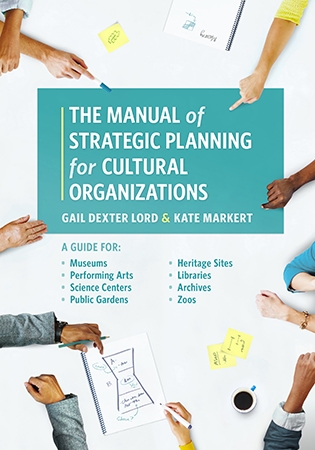 Authors: Gail Dexter Lord & Kate Markert
Published: 2017
The Manual of Strategic Planning for Cultural Organizations provides a comprehensive, step-by-step framework for developing and implementing strategic plans across a wide range of cultural institutions, including museums, performing arts organizations, libraries, and heritage sites. The book emphasizes the central role of strategic planning in ensuring institutional sustainability, especially in contexts of leadership transition, organizational change, and financial pressure. It outlines a structured process—from mission definition and environmental analysis to goal-setting, implementation, and evaluation—supported by case studies and practical tools. A key contribution is its holistic perspective, recognizing the convergence of different cultural sectors and the need for adaptable, cross-disciplinary strategies. The manual also highlights staff engagement, governance alignment, and financial integration as critical components of effective planning. It serves as both a theoretical guide and a practical handbook for cultural leaders and managers
 Authors: Kevin Moore (ed.)
Published: 1995
This foundational volume brings together key essays addressing the evolution and challenges of museum management. It covers strategic planning, marketing, human resource management, and financial oversight. The book frames museums as complex organizations requiring both cultural sensitivity and business acumen. It highlights tensions between mission-driven goals and managerial efficiency, offering insights into performance measurement and governance. Particularly valuable for practitioners, it situates museum management within broader debates about accountability, public value, and institutional change.
Running a Museum: A Practical Handbook

Published: 2004
Published by ICOM, this handbook offers a comprehensive overview of museum operations globally. It covers legal frameworks, staffing, conservation, public engagement, and finance. Designed for practitioners, it emphasizes practical solutions and adaptable strategies across different institutional contexts.
 Editor: François Mairesse
Published: 2023
Dictionary of Museology is a comprehensive reference work that systematically defines and contextualizes key concepts, practices, and debates within the museum field. Produced through international collaboration among more than 100 scholars and professionals, the volume includes over 1,000 entries covering topics such as exhibitions, collections management, governance, education, and museum economics. It reflects the evolving nature of museums, addressing contemporary issues including social inclusion, human rights, sustainability, and financial challenges. The dictionary aims to establish a shared, globally relevant vocabulary that facilitates communication across cultures and disciplines in museum practice. By combining academic rigor with professional insight, it serves as an essential tool for researchers, practitioners, and students seeking to navigate the increasingly complex and interdisciplinary landscape of museology.
Managing Change in Museums and Galleries: A Practical Guide
 Authors: Piotr Bienkowski & Hilary McGowan
Published: 2021
Managing Change in Museums and Galleries: A Practical Guide is one of the first dedicated handbooks addressing organizational change specifically within museums, galleries, and heritage institutions. Drawing on extensive professional experience across more than 250 organizations, the authors identify the key challenges encountered during change processes and provide practical strategies to address them. The book adopts a holistic structure, guiding readers through understanding change, preparing for it, leading transformation, engaging staff and stakeholders, managing risks, and evaluating outcomes. Each chapter focuses on real-world challenges and is cross-referenced to support integrated learning. Emphasizing participation and institutional culture, the manual highlights the importance of involving all levels of the organization. It serves as a practical and strategic resource for museum professionals navigating transformation in response to financial pressures, audience expectations, and sector-wide change.
 Editor: Sharon Macdonald
Published: 2006
A Companion to Museum Studies is a foundational interdisciplinary volume that brings together leading scholars to examine the theory and practice of museums across cultural, historical, and organizational contexts. The book covers a wide range of topics including museum management, governance, audience engagement, representation, and curatorial practice. It situates museums within broader social, political, and economic frameworks, emphasizing their evolving roles in knowledge production and public discourse. Several chapters address management-related issues such as institutional structures, professional practices, and visitor interaction, highlighting the shift toward more participatory and audience-centered models. Widely used in academic research, the volume serves as a key reference for understanding both the conceptual foundations and practical challenges of contemporary museum work.
 Authors: Oxford University / Saïd Business School research team
Published: 2018
Based on extensive interviews with senior museum professionals, this report provides an empirical analysis of leadership in the cultural sector. It examines how leaders develop skills, manage institutional complexity, and respond to sector-wide challenges. The report identifies key pressures including funding constraints, governance structures, and stakeholder expectations. It also explores leadership competencies such as adaptability, collaboration, and strategic thinking. By offering evidence-based insights, it contributes to both academic and practical discussions on sustainable museum leadership.
Leadership Matters: Leading Museums in an Age of Discord
 Authors: Anne W. Ackerson & Joan H. Baldwin
Published: 2019 (2nd edition; first published 2013)
Leadership Matters: Leading Museums in an Age of Discord examines the evolving nature of leadership in museums and cultural heritage institutions amid increasing complexity, uncertainty, and social change. Drawing on interviews with a wide range of museum professionals—from directors to emerging leaders—the book highlights leadership as both an individual and organizational practice. It challenges traditional assumptions about leadership, presenting “myths” and “truths” while emphasizing qualities such as self-awareness, authenticity, courage, and vision. The updated edition includes new case studies and voices reflecting contemporary challenges, including financial pressures, governance issues, and community expectations. The authors argue that effective leadership is essential for institutional resilience and relevance, offering practical insights for professionals, boards, and aspiring leaders navigating a rapidly changing museum landscape.
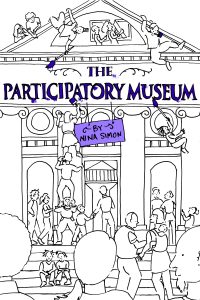 Author: Nina Simon
Published: 2010
The Participatory Museum is a seminal work that redefines the relationship between museums and their audiences by advocating for participatory, visitor-centered practices. The book presents museums as dynamic platforms where visitors actively contribute, collaborate, and co-create content rather than passively consume it. Drawing inspiration from social media and participatory culture, it provides a theoretical framework alongside practical tools for designing exhibitions and programs that foster engagement. The work identifies different levels of participation—from contribution to co-creation—and emphasizes building meaningful relationships between institutions and communities. Through case studies and actionable strategies, it demonstrates how participatory approaches can increase relevance, accessibility, and social impact. Widely regarded as a “future classic of museology,” it remains a key reference for contemporary museum management and audience engagement.
 Editors: Robert R. Janes & Richard Sandell
Published: 2019
Museum Activism explores the growing role of museums as active agents in addressing social, political, and environmental challenges. Bringing together more than fifty contributors from across the globe, the volume critically examines how museums engage with issues such as climate change, human rights, inequality, and decolonization. The book challenges the traditional notion of institutional neutrality, arguing instead for ethically grounded, values-driven practice aimed at generating real-world impact. Structured across thematic sections, it combines theoretical reflections with practical case studies, illustrating how activism can be embedded in museum work. It positions museums as powerful civic and intellectual resources capable of shaping public discourse and fostering social change, making it a key reference for scholars and practitioners interested in the evolving societal role of museums.
Financial Management in Museums: Theory, Practice, and Context
 Authors: Yuha Jung, Rachel Shane, Jaleesa Wells (eds.)
Published: 2025
This comprehensive volume addresses financial sustainability in museums through both theoretical and practical lenses. It explores revenue generation, budgeting, pricing strategies, and financial planning, while emphasizing accountability and mission alignment. The book presents global perspectives on funding models and highlights innovative approaches to financial resilience. It also examines how financial decisions intersect with equity, accessibility, and public value. By integrating case studies and strategic frameworks, it serves as a key resource for understanding the financial complexities of contemporary museums.
Museums as Agents of Change: A Guide to Becoming a Changemaker
 Author: Mike Murawski
Published: 2021
Museums as Agents of Change argues that museums must move beyond neutrality to actively contribute to social justice, community engagement, and systemic transformation. Drawing on case studies and personal experience, the author presents museums as spaces capable of fostering dialogue, equity, and civic participation. The book emphasizes actionable strategies for professionals to become “changemakers,” including embedding inclusive practices, rethinking institutional power structures, and strengthening community partnerships. It highlights the importance of aligning mission, leadership, and programming with social impact goals, while encouraging reflection on institutional values and responsibilities. Positioned within contemporary debates on equity and relevance, the work provides both a conceptual framework and practical guidance for transforming museums into more responsive, participatory, and socially engaged organizations.
Civilizing the Museum: The Collected Writings of Elaine Heumann Gurian
 Author: Elaine Heumann Gurian
Published: 2005
Written over a thirty-five year career, the essays in Civilizing the Museum introduce students to the powerful, sometimes contested, and often unrealized notion that museums should welcome all because they house the collective memory of all.Drawing on her experience working in and with museums in the US and throughout the world, Author Elaine Heumann Gurian explores the possibilities for making museums more central and relevant to society. Civilizing the Museum is a collection of essays written over more than three decades, offering a deeply influential perspective on the evolving role of museums in society. Gurian challenges traditional, object-centered models by advocating for inclusive, visitor-centered institutions that reflect and serve diverse communities. Organized around themes such as museum definitions, civic responsibility, architectural space, exhibitions, and the balance between rationality and emotion, the book explores how museums can become more relevant and accessible. Drawing on extensive international experience, Gurian emphasizes the social and ethical responsibilities of museums, arguing that they should function as civic spaces that welcome all and foster dialogue. Blending theory with reflective practice, the volume is considered a cornerstone of “new museology” and remains essential reading for understanding contemporary debates on participation, inclusion, and institutional change.
Key Journal
Museum Management and Curatorship
Publisher: Routledge
This peer-reviewed journal publishes research on contemporary issues in museum practice, including governance, leadership, ethics, and management. It serves as a key platform for academic and professional discourse, bridging theory and practice. Topics include globalization, digital transformation, diversity, and institutional strategy. The journal is widely used by researchers and practitioners to stay informed about emerging trends and debates in museum management.